Past the Myriad Mountains: Barron’s Says U.S. Stocks Have Weathered Two Major Tests and Are Poised for Action
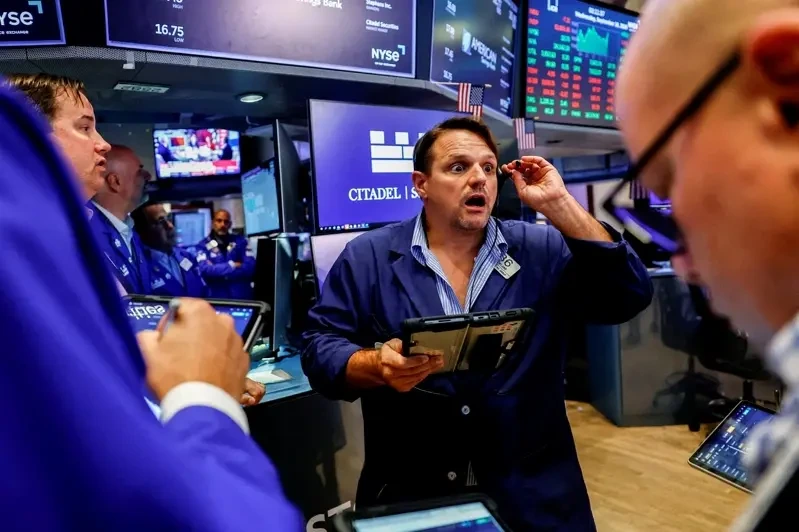
According to a report by Barron’s, U.S. stocks faced two major tests last week and performed admirably in both, demonstrating remarkable resilience. This suggests that, should a significant catalyst arise, the market could well continue to challenge new highs.
Looking back at the week, the first test arrived on Monday (the 14th), as investors grappled with the notion that AI companies like Anthropic and OpenAI might deliberately slow their development to save humanity from being destroyed by super-intelligent AI. This concern stemmed from a report published the previous weekend by Anthropic CEO Dario Amodei, who warned that AI companies should decelerate R&D due to safety concerns and even called for comprehensive regulation of the AI industry.
Not to be outdone, Microsoft announced it would implement additional safeguards in its own development processes.
- Warnings about AI’s future… outweighed by the lure of profit
Just days earlier, Jacob Coxon—an Anthropic employee and former OpenAI researcher—had resigned, citing the industry’s breakneck development pace and lack of proper safety protocols; he feared that, left unchecked, AI “could lead to human extinction before the end of the 2020s.”
If AI developers were to slow their growth, the massive chip-buying sprees seen previously would naturally subside. Consequently, the iShares Semiconductor ETF plunged 5.6% that day—its largest single-day drop in two months—but the pessimism quickly evaporated, and the ETF closed higher for each of the following four days. The Philadelphia Semiconductor Index (SOX) followed the same trajectory.
This market reaction appeared to validate the view held by Vivek Arya, a semiconductor analyst at BofA Securities. He wrote: “The economic stakes are simply too high for any sustained, meaningful slowdown to occur.”
He further noted that, given the unlikelihood of Washington imposing strict regulations on the industry, he expects “an eventual industry-led self-regulatory body to emerge, similar to FINRA in finance or the MPA in the film industry.” Perhaps the next generation of Claude will even bear a warning label: “This model poses a threat to humanity.”
Two days later, U.S. stocks faced their second test. On the 16th, the Federal Reserve announced its first interest rate hike in three years and signaled that further increases were likely. The stock market initially showed little reaction to the decision, but as Fed Chair Powell began to explain his reasoning, the S&P 500 turned negative and closed lower.
‧The Fed shows its hawkish side… but causes only minor scratches
“I would have a hard time describing overall financial conditions as tight,” Powell said at the press conference. “The committee generally agrees with that view. Therefore, we have removed some of the accommodation.”
Because Powell speaks infrequently, his every word is scrutinized. In this instance, his description of the rate hike as “removing some accommodation” was interpreted by the market to mean that policy remained accommodative even after the increase. Given that the economy is at full employment and inflation is above target—conditions under which policy arguably shouldn’t be accommodative—this clearly implied that Powell would not hesitate to raise rates further to withdraw more accommodation.
Things took a curious turn when CNBC senior economics reporter Steve Liesman asked where the current federal funds rate stood relative to the so-called “neutral rate.” Powell replied that while he found the concept of a neutral rate interesting “from an academic perspective,” it had “no practical effect on the decisions we make today.”
This was a puzzling stance. Economist Claudia Sahm wrote, “How can we say we have ‘reduced accommodation’ without establishing a neutral rate? The neutral rate is precisely the dividing line between accommodative and restrictive policy.”
Some speculate that Powell aims to maintain economic balance through a series of effective rate hikes without provoking his boss, Donald Trump; this would explain why he avoided issuing explicit forward guidance, opting instead to subtly hint at future rate increases.
In any case, the market quickly recovered; the day after the Fed announced the hike, the S&P 500 surged 1.14%, marking its best single-day performance in over a month. The market evidently believes that even if the Federal Reserve raises interest rates twice more this year, the impact on S&P 500 companies will likely be limited; these firms have significantly reduced their reliance on debt, with their net debt-to-EBITDA ratio dropping from 1.7 a decade ago to 1.3. Furthermore, earnings growth remains robust at around 26%.
‧ No bubble in sight… just waiting for a catalyst
More important than the trajectory of short-term interest rates is whether the Federal Reserve can maintain its credibility and strengthen its capacity to respond to future economic downturns. Under Walsh’s leadership, the Federal Reserve has clearly adopted the right approach.